


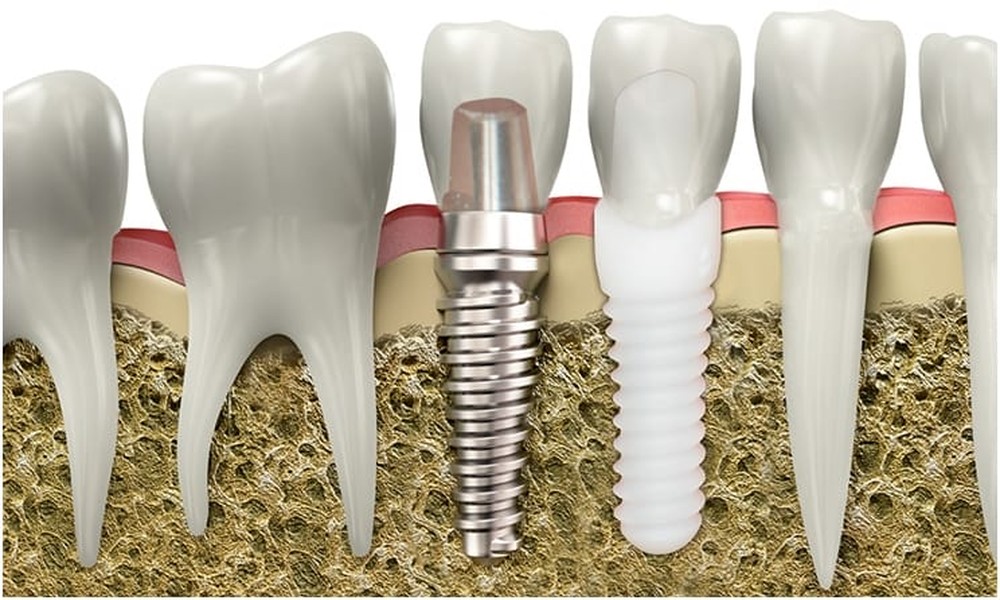
To more closely resemble natural teeth, dental implants are artificial tooth roots. These attach the prosthetic tooth bridge or crown to your jaw. It is a metal post or frame. It is surgically placed just below your gums in the jawbone.
Before the gums are sutured up and given time to heal. The post must be screwed in by cutting across the gums. And then, drilling down into the bone. Dental practitioners will screw in the bridge or crown together with the abutment – learn more about these services.
Once everything has healed completely. After they are positioned. They make it possible to attach your crown and restore your missing choppers with remarkable outcomes.
It is more stable and long-lasting than detachable fake teeth. Employing the insertion as a tooth root anchor. It enables your crown to function and look like a typical natural tooth.
Why should someone who is losing choppers select zirconia implants? Why use all-ceramic or non-metal materials?
Aesthetic Look
The color of titanium artificial teeth is gray. Zirconia, on the other hand, is milky white in hue. As a result, they are visually identical to both a natural tooth and a ceramic prosthesis.
Gums often recede over time. As a result, a titanium implant’s structure could become visible. Particularly on the front tooth, its metallic hue would be unsightly. Because zirconias are white, this problem does not occur with them.
It provides an appealing and seamless fit with natural teeth due to its naturally white color. This improves quality of life and contributes to a bright, consistent smile.
Biocompatibility
Zirconia is a substance that is biocompatible. It integrates easily and doesn’t have any negative effects. Numerous benefits of this material have been identified by biocompatibility research:
- The structure resembles that of bone tissue constituents. As a result, the body won’t reject the artificial teeth because it perceives them as a foreign thing.
- Its expansion coefficient under heat influence is roughly equivalent to that of bone. This speeds up osseointegration and greatly lessens stress at the site of implantation.
- It does not react chemically with the soft tissues of the body since it is bioinert. Allergies and inflammatory processes are avoided as a result.
FYI: Read from https://community.aafa.org/blog/7-things-you-should-know-about-oral-allergy-syndrome about food allergies, too.
Strength and Durability
It is an exceptionally durable material when it comes to bending, compression, and breaking. Its polycrystalline structure makes it resistant to crack development and able to sustain stresses.
A natural tooth is more likely to break under impact than an artificial tooth. These artificial teeth successfully integrate into the jawbone. This is due to their high degree of osseointegration.
This feature, called osseointegration, is essential to the implant’s durability.
According to research, the osseointegration rate of zirconia is similar to that of titanium. It’s reaching more than 95% in the first year following surgery and remaining at this level over time.
Unaffected by Corrosion
Because it is a biologically insensitive substance. It does not react with bodily tissues. Or corrode in the wet environment of the oral cavity. Thus, it will last for many years.
When its alloys and titanium come into contact with oxygen. A passive coating of titanium oxide forms on the surface, preventing further corrosion.
However, titanium may begin to corrode in some situations. Such as any signs of galvanic currents brought on by the presence of other metal prostheses. Or extremely high fluoride levels in the oral cavity.
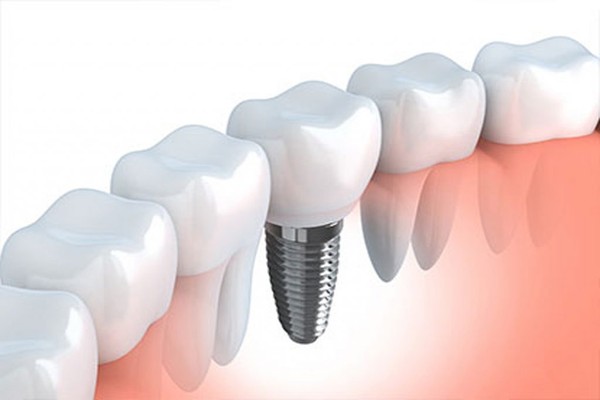
Zirconia is not involved in galvanic corrosion. That’s because it does not transmit electricity as titanium does. For individuals who already have metal restorations or who are highly sensitive to metals. This makes it the preferred option.
Does Not Lead to Sensitivity
In the mouth, it is essentially undetectable. This is impacted by:
- Low thermal conductivity, which lessens sensitivity to variations in temperature.
- The taste is not metallic. These implants don’t taste metallic like titanium implants do.
Anyway, read here for other concerns regarding metallic tastes in your water.
- These implants provide a body-friendly option that is 100% biocompatible. It is ideal for people with metal sensitivity by avoiding metals. Thus, it eliminates any potential detrimental effects on systemic health.
Ideal for Same-Day Implantation
If there are no contraindications, they can be inserted right away following tooth extraction.
A monobloc implant that comes with an abutment is the design of the artificial teeth construction.
The installation time is greatly shortened as a result. Zirconia reduces waiting time for crown insertion by achieving faster osseointegration.
There are no metallic elements that draw microorganisms. Implantations are cleaned with plasma before attachment. Infection risk during implantation is reduced as a result.
Maintains Gum Health
Gum health is significantly impacted by zirconia’s biocompatibility. The absence of chemical interactions prevents inflammation.
The surfaces are smooth and free of sharp angles. This removes any potential stress and guarantees that the construction adapts to the gums comfortably.
The flat surface prevents plaque buildup. This characteristic keeps periodontitis from developing.
It guarantees a clean, natural appearance by removing the possibility of unattractive gray lines. Or the metallic shine at the gum line that might happen with other artificial teeth.
