


For most people, a hair transplant hurts less than they expect. The local anaesthetic injections at the start are usually the most uncomfortable moment, after which most people feel pressure rather than pain. Afterwards, tightness and mild soreness are common for a few days.
This article covers what each stage tends to feel like, what to expect on the first nights at home and how to prepare.
What does the local anaesthetic feel like?
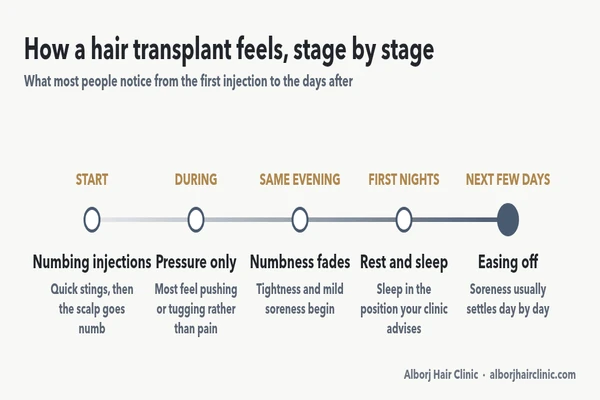
A hair transplant is done under local anaesthesia, so you stay awake while the scalp is numbed. The anaesthetic is given as a series of small injections into the donor area and the area being treated.
This is the part most people find uncomfortable. Many describe a sharp sting or pinch with each injection, followed by a brief burning or tight feeling as the anaesthetic spreads. It passes quickly, and the skin then goes numb.
If you feel anxious, tell the team before they start. Knowing what is coming, and being told when each injection is about to happen, often makes it easier.
The injections are a short part of a long day. Once they are done, the hardest moment is usually behind you.
Will you feel anything during the procedure?
Once the anaesthetic has taken effect, most people feel pressure, light tugging or vibration rather than pain. Overall, most people describe mild discomfort, with little or no pain.
With DHI (Direct Hair Implantation), follicles are taken out one by one with fine FUE punches. Each one is then placed into the thinning area with an implanter pen, by hand, and no stitches are used. You may notice the instruments moving, but it should not hurt.
A transplant can take several hours, so the numbing may need topping up as the session goes on. If you feel anything sharp, say so straight away.
“Most of my patients tell me the anaesthetic is the only part they really feel. After that, it is mainly a sense of pressure. If anything does feel sharp, I want to know straight away so we can add more anaesthetic.”
Can feeling nervous make it hurt more?
It can. Anxiety tends to make people more aware of every sensation, so a calmer mind often means a more comfortable session.
- Breathe slowly during the injections. A long, steady breath out can take the edge off each sting.
- Ask about breaks. Find out beforehand when you can stop to eat, stretch and use the bathroom.
- Speak up early. If you feel stiff, cold or uncomfortable, tell the team so they can adjust your position or the numbing.
- Keep your mind busy. Headphones and something familiar to listen to help many people relax.
Talking through your worries at the consultation also helps. The more you know about the day, the less there is to fear.
How does it feel on the first nights afterwards?
The anaesthetic wears off a few hours after the procedure. At that point, most people notice tightness and mild soreness, often more at the back of the head where the follicles were taken.
- Tightness. The scalp can feel tight or tender, and this usually eases over the first few days.
- Mild soreness. Most people describe a dull ache rather than sharp pain.
- Numbness or tingling. Small areas may feel numb or tingly for a while as the nerves settle.
- Swelling. Some people notice puffiness around the forehead in the first days, which then settles.
Sleep needs a little planning. Clinics often advise sleeping on your back with the head slightly raised for the first few nights, so nothing presses on the grafts. Follow the position and timing your own clinic gives you.
Ask your clinic which pain relief it recommends for these days, and take only what it advises.
How can you prepare for a more comfortable day?
Good preparation makes a long day easier to manage. Your clinic will give you its own list, but these points are common:
- Rest well the night before. Being tired tends to make any discomfort feel bigger.
- Eat beforehand. A proper meal before you arrive helps you stay comfortable through a long session, unless your clinic tells you otherwise.
- Wear a button-up or zip top. You will not want to pull anything over your head on the way home.
- Share your full medical history. Tell the clinic about any medicines or supplements you take, and follow its advice on each one.
- Ask about alcohol and smoking. Many clinics ask patients to avoid both for a period before and after. Follow your own surgeon’s timing.
- Plan the journey home. Arrange a lift or a taxi, so you can simply rest.
- Bring something to pass the time. Music, a podcast or a film can make the hours go faster.
When is pain after a hair transplant not normal?
Mild soreness that eases a little each day is expected. Pain that is severe, or that gets worse instead of better, is not typical and should be checked.
Contact your clinic promptly if pain comes with spreading redness, heat, pus or a fever. It is always fine to call with a question, even if everything turns out to be normal.
About Alborj Hair Clinic
Alborj Hair Clinic is a hair transplant clinic in Mazaya Centre, Al Wasl, Dubai. Its surgeon, Dr Dimitrios Ziakas, has 24 years of experience and has performed more than 4,000 hair transplant procedures. He is a member of the International Society of Hair Restoration Surgery (ISHRS) and uses the DHI (Direct Hair Implantation) technique.
To read more about the DHI technique or arrange a consultation, visit Alborj.
Before-and-after case studies on the clinic’s website show how results develop once healing is complete.
Frequently asked questions
Are you awake during a hair transplant?
Yes. It is done under local anaesthesia, so you stay awake while the treated areas are numb.
Which part hurts the most?
For most people, it is the anaesthetic injections at the start. Once the scalp is numb, the main sensation is pressure.
How long does the soreness last?
Tightness and mild soreness usually ease over the first few days. If pain gets worse instead of better, contact your clinic.
Can I take my usual painkillers afterwards?
Ask your clinic first. It will tell you which pain relief to use and whether any of your usual medicines should be avoided.
